
Coil-Building Tools and Kits
Coil-building tools and kits
“If you want to build your own coils, you definitely need …” You’ve probably heard something like that in a chat between a beginner and a “coil-building pro”—but is it really true? Do you actually need all those tools? The answer isn’t completely straightforward, because in the end, you decide what’s a must-have and what’s simply enough. Some tools are just more important than others.
What tools do I need to get started?
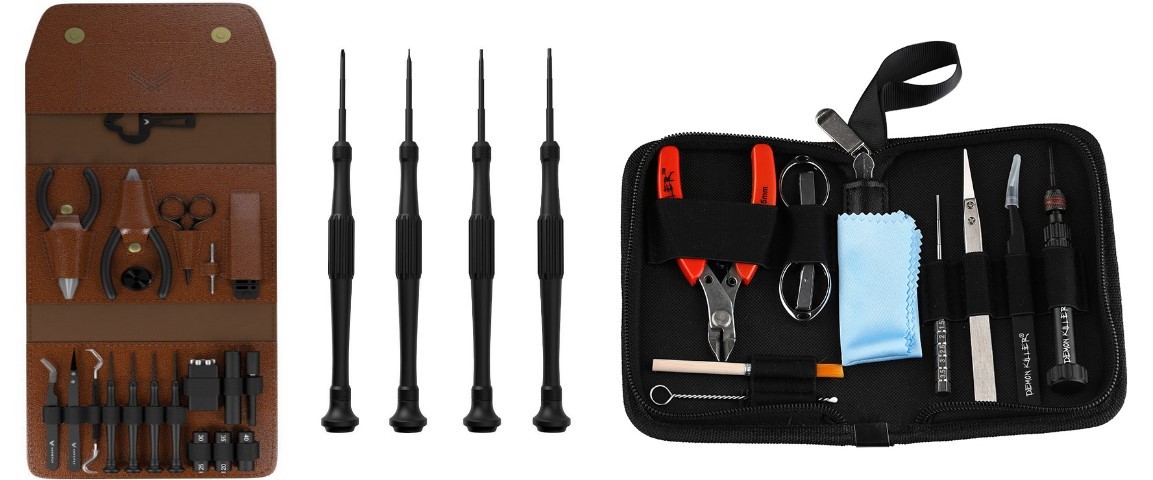
When you’re just getting into rebuilding atomizers, you’ll need one or two accessories. But it doesn’t have to be the luxury, end-of-days, ultimate giga kit. Of course, you might not want to buy every tool individually. That’s where a coil-building kit comes in handy; they’re available in all sorts of sizes and configurations. Just make sure the basics are included. It’s also worth paying attention to tool quality. “Buy cheap, buy twice” is a saying I once heard, and like with so many things, it really fits here. You may already have some tools at home, whether in the hobby room or simply in your toolbox. The tools used for DIY coil building are usually fairly compact. So let’s go through what belongs in a basic setup and what’s more of a “nice-to-have”.
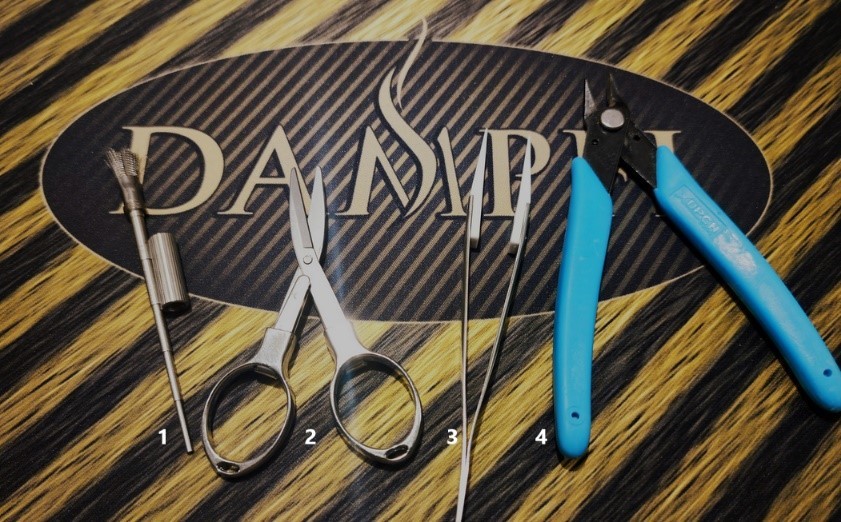
1. Coil jig
Used to wrap coils and ideal for holding the coil in place and lining it up
2. Scissors
For cutting the cotton
3. Tweezers
In this case, ceramic-tipped tweezers
4. Flush cutters
For trimming excess wire from the coil
In principle, these four tools are enough to put a build into your atomizer. A tool for loosening or tightening the atomizer screws is usually included in the box. You can check the resistance and dry-burn the coils on a regulated mod. That covers the basics.
The world of the “coil-building pros”
For convenience, there are ready-made kits; at a minimum, they should include the four tools listed above. Often, you’ll get more than that, or the tools may look a little different. Whether you need all of it is up to you. Some of the included tools are genuinely useful and let you install your build as neatly and precisely as you like. To start with, a small kit is more than enough. If you realise over time that you need more tools, you can expand your kit or replace it with a larger one for home use. On the go or when travelling, the small kit is ideal simply because it saves space.